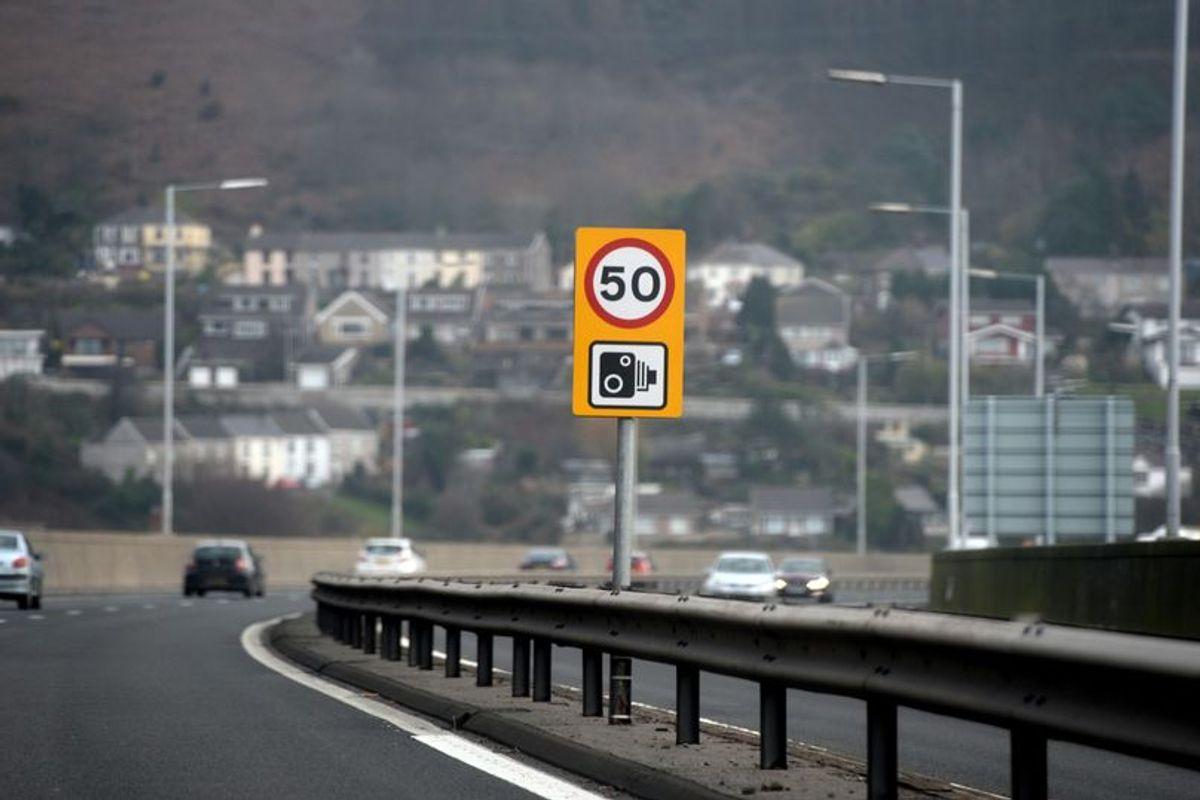
 If you’ve driven along the M4 in South Wales recently, you’ll be familiar with the average speed checks. Whether it’s the stretch past Port Talbot’s steelworks or the busy run around Newport, the digital "50" signs have become a permanent fixture of the Welsh motoring landscape.
But a new petition is gaining traction, demanding a return to the national 70mph limit across the entire M4 in Wales. Titled “Return all the M4 to the 70mph speed limit, in Wales”, the campaign argues that the current restrictions are unnecessary, unpopular, and detrimental to free travel.
Here is a look at the arguments driving the petition and the reasons why the Welsh Government is holding firm on the brakes.
The Petitioner’s Case: "Neither Wanted nor Required"
The petition, submitted to the Senedd, doesn’t mince words. It claims that the "overwhelming majority" of drivers believe the 50mph zones are stifling travel and causing unnecessary congestion ("snarl-ups").
The core argument for restoring the 70mph limit rests on a few key points:
Modern Vehicle Safety: The petition argues that modern cars possess far superior braking and handling capabilities compared to the era when the 70mph limit was first standardised. Therefore, slowing traffic to 50mph is an outdated safety measure.
Freedom of Movement: Critics feel the lower limits restrict the ability to travel freely, turning major motorways into slow-moving bottlenecks.
Congestion: Far from smoothing traffic, opponents argue the limits cause frustration and bunching, making the driving experience more stressful.
The Government’s Stance: Pollution and Flow
The 50mph limits were not introduced arbitrarily. They are primarily a response to environmental mandates.
The "Clean Air" Mandate: The 50mph zones at locations like Port Talbot were introduced after the Welsh Government was ordered by the High Court to take immediate action to reduce nitrogen dioxide (NO2) levels. The government maintains they have a legal duty to protect public health, citing World Health Organisation data on the dangers of outdoor air pollution.
Traffic Flow (The "Stop-Start" Effect): In Newport, the argument is slightly different. Following the Lord Burns report (commissioned after the M4 relief road was scrapped), the 50mph average speed check was recommended to smooth out traffic flow. The theory is that a steady 50mph prevents the "brake-accelerate-brake" shockwaves that cause phantom traffic jams.
The "60-Second" Reality: Supporters of the limits often point out that over a short 3-mile stretch, the difference between driving at 50mph and 70mph saves less than a minute in travel time—a small price, they argue, for cleaner air and fewer accidents.
Where Do You Stand?
The petition is currently open and collecting signatures on the Senedd website. It closes in 2026, giving it plenty of time to gather the 10,000 signatures required to be considered for a debate in the Senedd.
Is the 50mph limit a vital health and safety measure, or is it a heavy-handed restriction on the country’s most important economic artery?
You can view and sign the petition here: Return all the M4 to the 70mph speed limit, in Wales